Kitchen Storage Ideas That Make Everyday Life Feel a Little More Luxurious
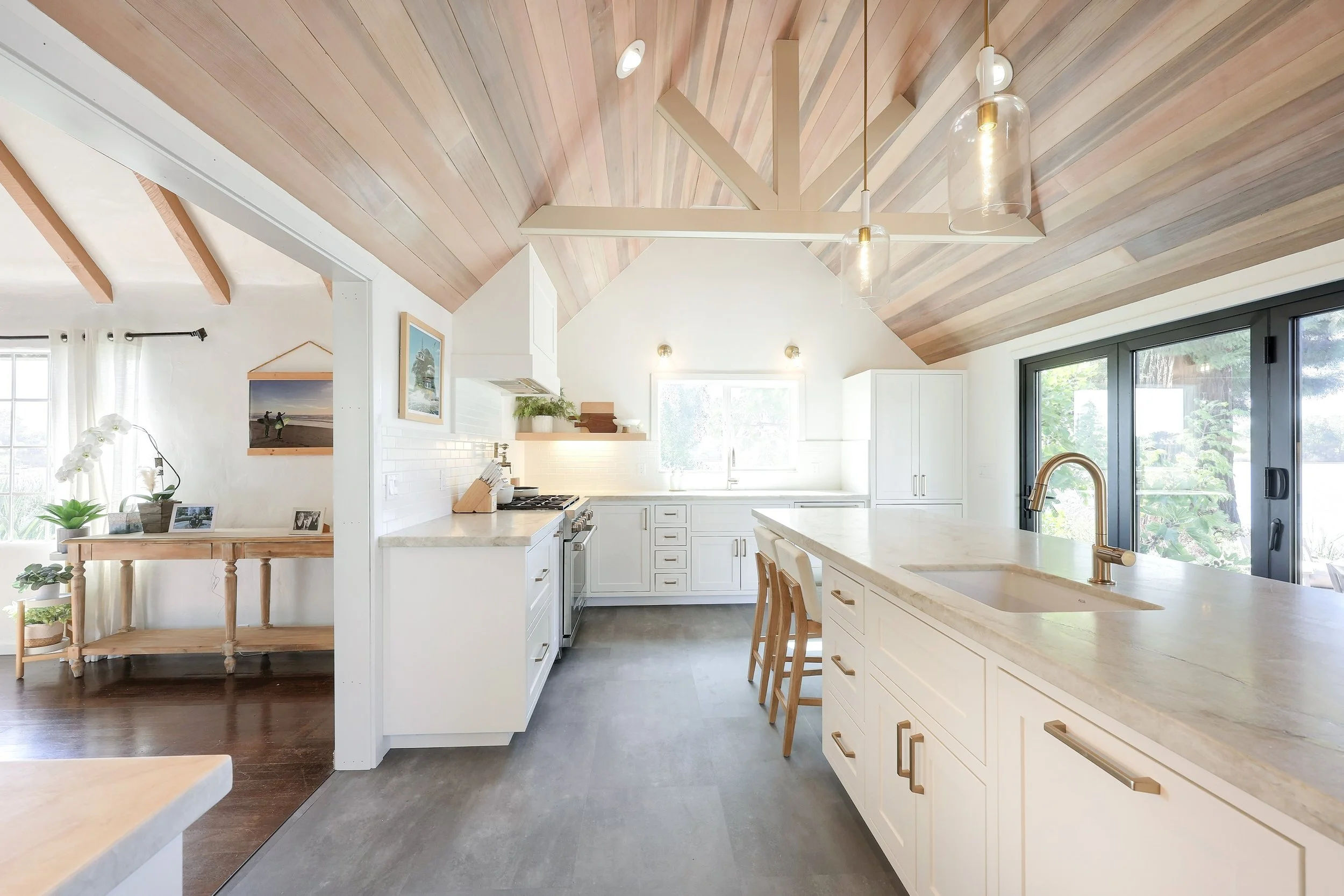
Transforming this kitchen into it’s current Lakeside Luxury design was no small task, and every detail enhances everyday life!
When you imagine a luxurious kitchen, you might picture beautiful countertops, a spacious island, or cabinetry in just the right color - but there’s another kind of luxury that your body and mind appreciate every single day: a kitchen that makes your daily routines easier.
Having your coffee supplies within reach, a clear place to prepare dinner, and dishes that are simple to put away can make your home feel more comfortable without adding a single square foot.
Intentional storage is a big part of making your home feel more comfortable without having to make it any larger. This comfort is truly the everyday luxury that I love to share, and help homeowners achieve through thoughtful interior design choices that revolve around how each person uses the space, what the homeowner’s priorities are, and how they move through their day and home.
Enhancing your routines through design (hello storage solutions!) starts with paying attention to how you actually use your kitchen. In this blog I’m sharing 4 details that, as a certified interior designer, I would say are worth considering before you make your final selections.
Make comfortable reach part of the design
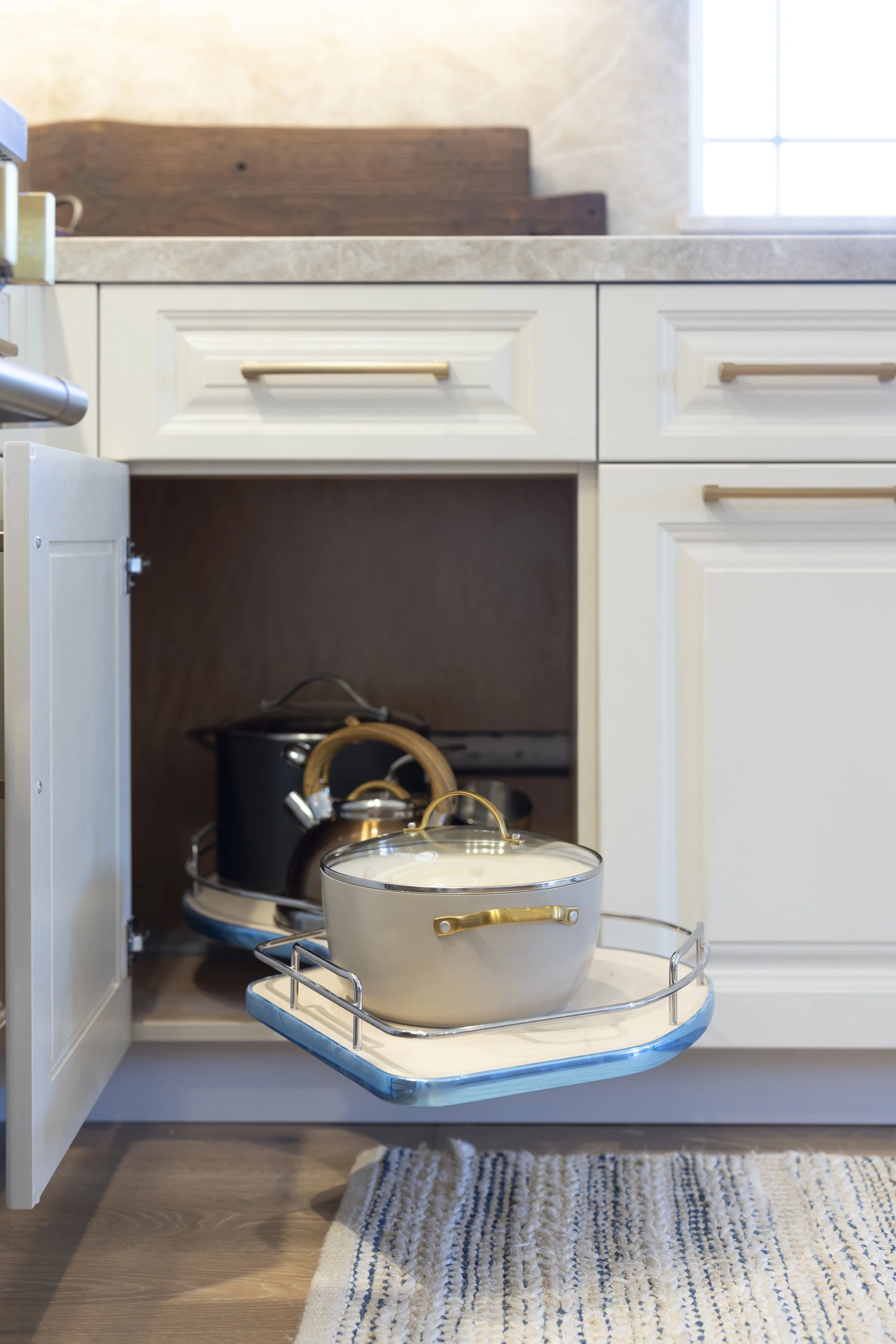
No more deep dark corners here! This Traditional Elegance Kitchen has so many useful and well thought out storage cabinet storage solutions - and beautiful finishes and appliances too!
“Easy to reach” means something different to everyone who uses the kitchen. A shelf that feels convenient to a taller person might require someone else to get out a step stool (and there are cabinet accessories that store step stools!), while lifting a heavy pot from a low cabinet may be uncomfortable for another cook. Giving frequently used items a home that suits the people using them is one of those thoughtful decisions you can make that will improve your daily routines! For example, you may have a bread-maker, rice cooker, or vacuum sealer that you don’t use regularly, but they’re taking up valuable real estate in the cabinetry you access the most - the goal here is to assess what you use daily, often, or regularly and make sure those items (whatever they may be) can be stored in an organized way where you can easily use them, then design additional storage for overflow or seldom used items. Storage doesn’t just mean cabinetry - there are a variety of pot and pan pull out features, swing up shelves for stand mixers, different types of divided drawers for dishes, and so on!
Consider whether children need access to their lunch containers, whether guests can find a drinking glass without entering the cooking area, and where heavy items are easiest for you to handle. You may be able to improve an everyday task simply by moving an item to a more comfortable location or choosing cabinet handles that are easier to grip. If you need storage features that bring items within reach, I cover pull-down shelves, appliance lifts, and other options in The Most Requested Cabinet Storage Features for Kitchens.
2. Give Your Everyday Routines a Home

Consider a dedicated corner for making coffee, storing all the coffee accessories, and other yummy beverages, like this one in my Family Farmhouse Makeover make everyday routines more beautiful.
Think about the steps involved in making your morning coffee, from finding a mug to reaching for the beans, filters, and your favorite sweetener. If those supplies are scattered around the kitchen, you may be doing quite a bit of prep before you’ve even had your first sip! Bringing them together in one area where you make coffee creates a more convenient routine, and it can be as simple as rearranging an existing cabinet.
This same approach works for packing lunches, baking, or preparing your pets’ meals. Start by grouping the things you use together, then try the arrangement for a week to see whether it feels natural. If you’re renovating, consider locating a beverage or snack area where someone can help themselves while another person cooks, so the kitchen can comfortably accommodate both activities.
3. Plan Ahead to Make Cleaning Up a Breeze
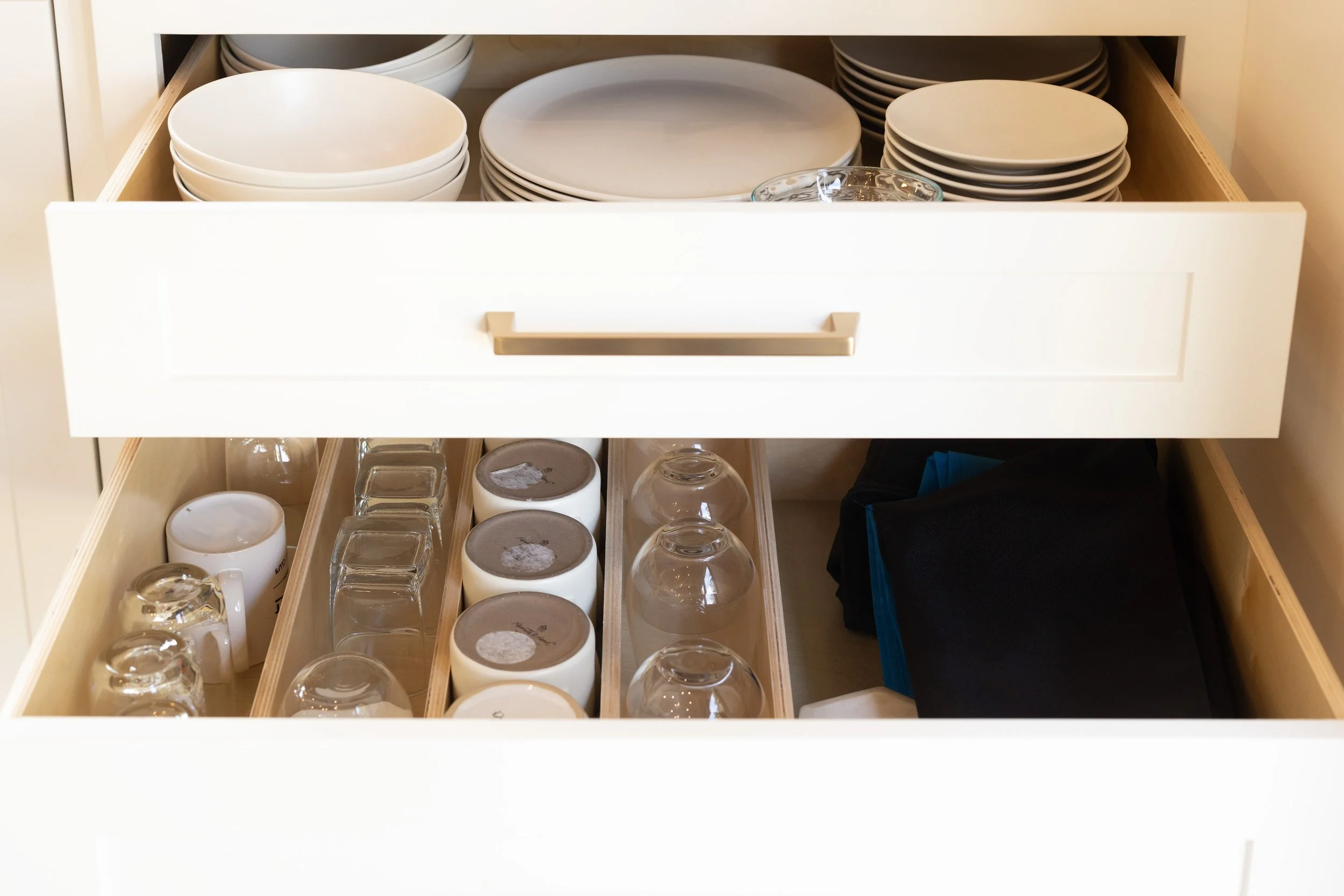
Base cabinet drawers for dish storage keep things organized because you can look down on the contents and they’re more accessible than upper wall cabinets.
Cleanup deserves just as much attention for your kitchen storage as your cooking (and baking!) processes do.
To help homeowners plan for more efficient storage and clean up routines, I ask a few questions:
What happens when you unload the dishwasher? Do you have to walk, bend, reach? Is it comfortable and easy to do?
What is your cooking, prep, and clean up routine like? Who’s participating?
What are you using daily, what’s used often, what’s used seldom, what’s sentimental?
If putting away a plate means walking around an open appliance door or interrupting someone at the sink, a different storage location may make that routine easier. The same thinking applies for accessing and storing food containers, serving pieces, small appliances, and cooking tools. Storage that requires you to rearrange several other items each time you put something away can become frustrating, particularly at the end of a busy day.
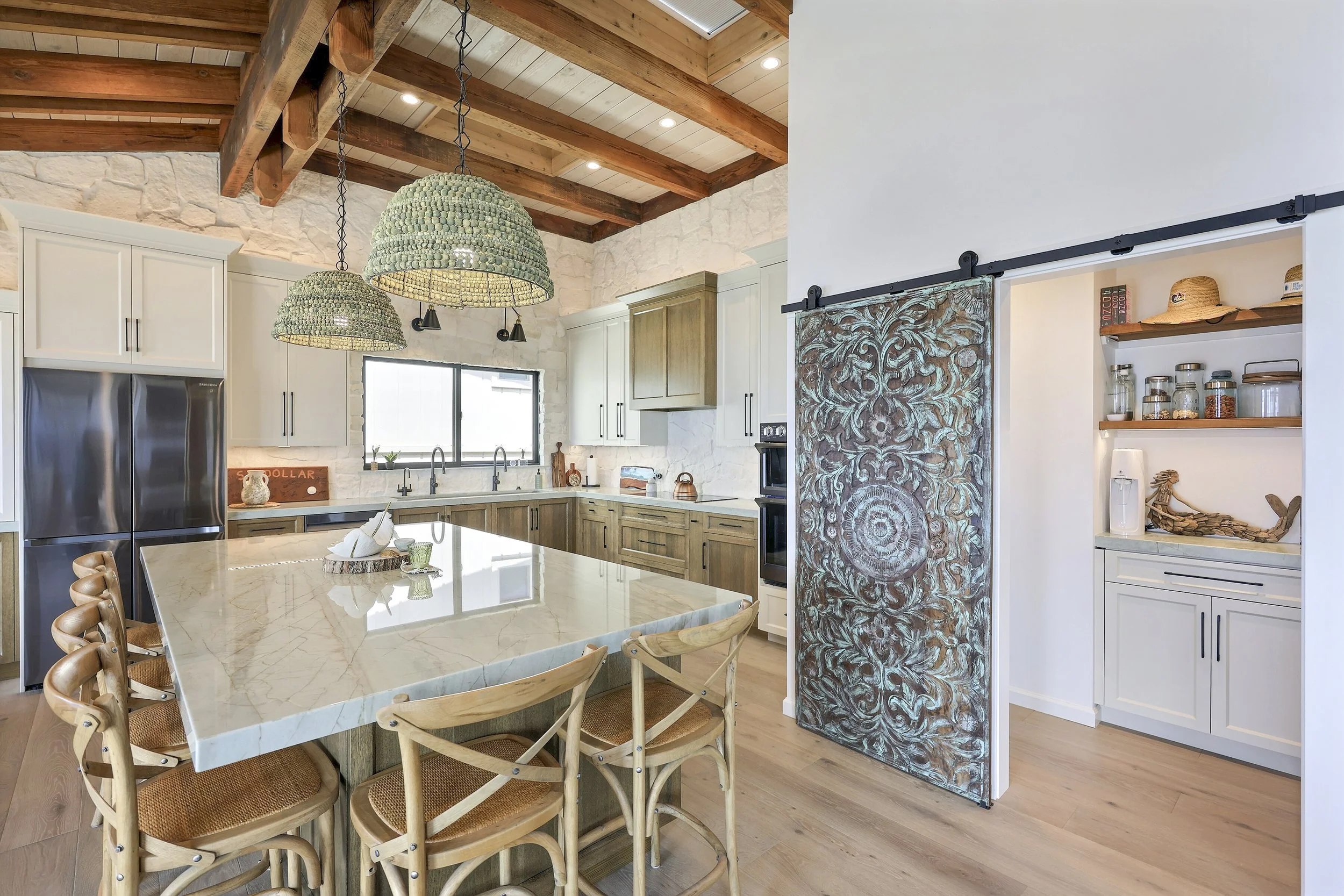
When redesigning this Ocean View Retreat kitchen to include a walk in pantry, we wanted it to be just as beautiful and it was useful, without a huge footprint. The solution included shallow base cabinets, repurposing floating wood shelves, and a decorative hand-carved Indonesian door that we installed as a barn door - which acts as artwork whether it’s open or closed!
Professional Interior Design Tip: Before you’ve finalized your design, sort items into categories, ‘daily use’, ‘regular use’, ‘rarely used’ and ‘sentimental’. The sentimental items may be things you want to display in glass door wall cabinets or open shelves, the daily use items should be in the most accessible locations, followed by the regular use items, then the rarely used items. Once these categories are established, you can group ‘like with like’, and that’s how we’ll determine what size drawers or roll out shelves you need, how many you need, which drawers need dividers, which cabinets need lid storage (pots, pans, Tupperware), and where they should go. I always ask homeowners to do this organizing activity because the last thing we want to pay for is more inefficient storage that doesn’t solve the real pain points - why have a brand new kitchen without making it as efficient as it can be? Assess your current needs and be thoughtful about what you may need or acquire in the future!
If you decide to work with a designer (like me!) you’ll be able to see the potential for your renovation with some 3D renderings - this is especially helpful when you have significant changes like moving/removing walls and reconfiguring space.
4. Leave Room for Your Kitchen to Evolve
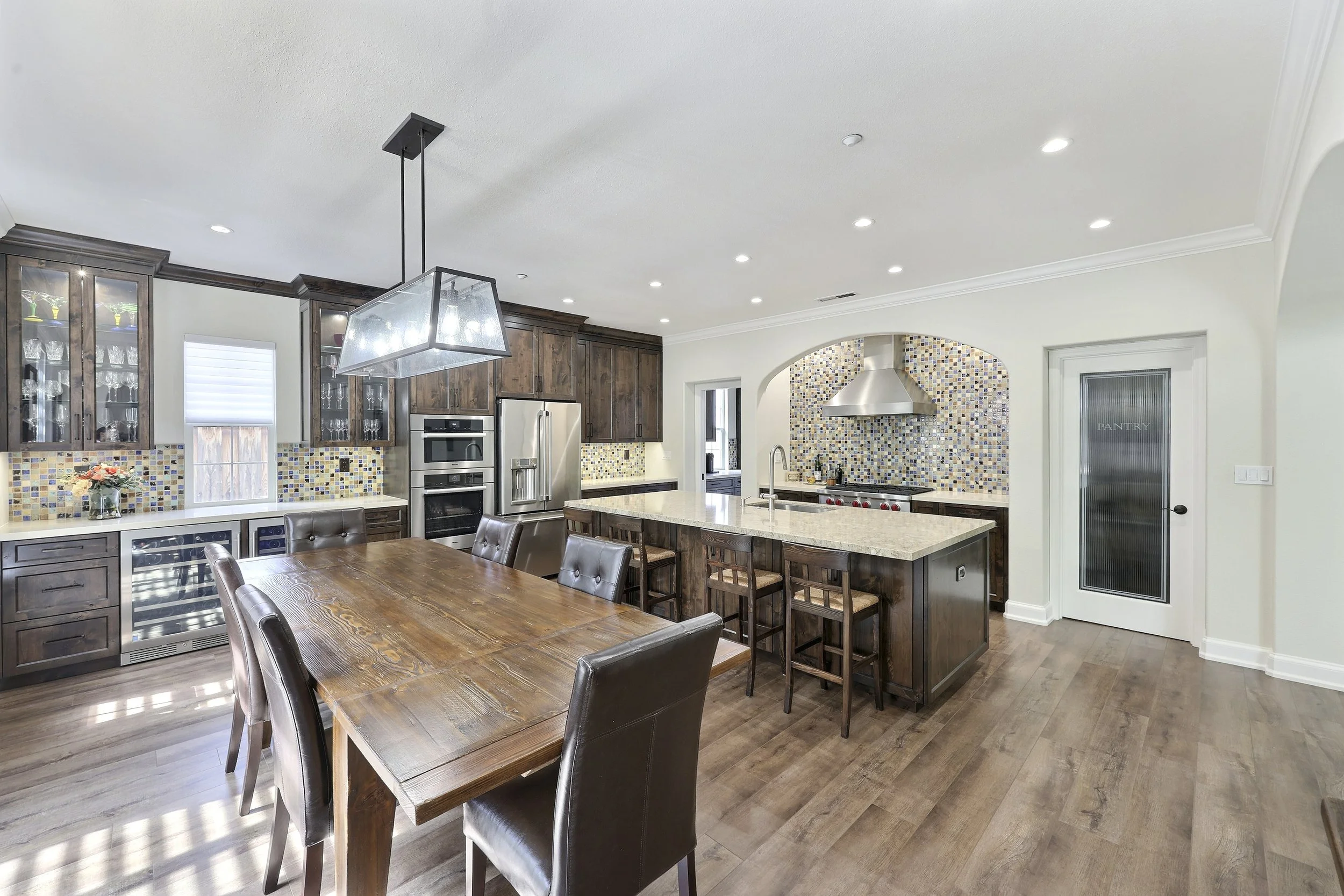
Dream spaces like this Color and Contrast Kitchen come after months of planning and preparation in design!
Yes, we want to design the kitchen to store all of your cooking needs, but if there’s anything I’ve learned over the years (and constantly updating my own home!), it’s that a home is never really ‘done’. As we evolve and life changes, so do our needs and our homes. When helping folks design their kitchens, we design for current and future needs. I’m proud to say, I’ve never given anyone less storage than they had before - so we want to design with breathing room. This gives you flexibility to add to what you have, move things as needed (flexible storage solutions like roll out shelves can store pots, pans, snacks, small kitchen appliances, and even dishes!) and the ease to find and use what you have.
A thoughtfully planned cabinet should also be manageable to clean, so consider whether you can reach its interior surfaces and remove trays or inserts when needed. Leaving some space around your everyday belongings helps you retrieve and return them without constantly reshuffling. I share more about looking ahead to your household’s changing needs in Thoughtful Design Upgrades to Improve Function & Comfort in Your Home.
If you can take one thing from what I’ve shared with you here, I’d say to start by focusing on what would make your day easier! What takes more time than it should and how can we improve your routines?
You don’t have to change your entire kitchen to begin enjoying the benefits of thoughtful design. Pay attention to the cabinet you avoid opening because it’s jam-packed, the countertop that’s always crowded, or the task that requires more bending and reaching than you’d like. Choosing one of those frustrations gives you a practical starting point, whether the solution is rearranging what you already have or including a specific improvement in your renovation plans.
The details that bring everyday luxury into a kitchen are often very personal, because they reflect how you cook, gather, and care for your home or yourself. I love helping homeowners discover those possibilities and bringing the practical and beautiful parts of a space together.
If you’re ready to explore what that could look like in your kitchen, let’s talk about your project and the thoughtful changes that would make being home feel even better.